
IndusInd Bank was the top loser in the Sensex pack, shedding over 3 per cent, followed by HUL, ONGC, ICICI Bank, Axis Bank, Kotak Bank, M&M and Tech Mahindra. NSE Nifty tumbled 154.25 points to 14,696.50.

From the Sensex pack, State Bank of India, ICICI Bank, IndusInd Bank, Axis Bank, Kotak Mahindra Bank, HDFC Bank, Reliance Industries were among the major laggards. Bucking the trend, auto stocks Tata Motors and Mahindra & Mahindra closed with gains.
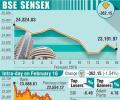
The S&P BSE Sensex ended down 362 points at 23,191.

Titan was the top gainer in the Sensex pack, rallying over 5 per cent, followed by Bajaj Auto, Bajaj Finserv, SBI, Nestle India, ITC, Axis Bank and Tata Steel. Nifty rose 46 points to its fresh closing peak of 17,991.95.
NPA problem to continue for next 2-3 quarters: banks to FinMin
PowerGrid was the top gainer in the Sensex pack, rising around 4 per cent, followed by NTPC, Tata Steel, Bharti Airtel, Sun Pharma and Bajaj Finserv. On the other hand, IndusInd Bank, Asian Paints, Infosys, Bajaj Auto and Maruti fell up to 2.59 per cent.
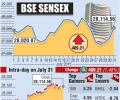
Equity benchmark Sensex climbed 154 points to end at a fresh all-time high on Monday, tracking gains in ICICI Bank, L&T and Kotak Bank amid persistent foreign fund inflows and a largely positive trend in global markets.

Sectorally, telecom, realty, auto and banks were among the top losers, shedding as much as 2.22 per cent.
Nifty PSU bank index dropped nearly 2%
ITC was the top loser in the Sensex pack, shedding nearly 3 per cent, followed by Tech Mahindra, Axis Bank, Asian Paints, TCS, HCL Tech, HDFC and Kotak Bank.
.jpg)
Banking as we know it will stand on its head in the next 10 years.

There are NPAs on account of the industrial downturn in sectors like steel, infrastructure and power.

India's economy will do well once vaccination reaches a critical mass as pent up demand, global recovery and easy financial conditions will boost activities, RBI's Monetary Policy Committee (MPC) member Ashima Goyal said on Tuesday.

Recovering from an order dry-up and change in market conditions, Gurgaon-based Rites is looking to bid aggressively in global export and consultancy tenders and run with a volume-led approach, its chairman and managing director (CMD) Rahul Mithal said. Rites is a railway consultancy public sector undertaking (PSU) under the aegis of the Ministry of Railways. "We started the year with two huge challenges - the export order book, where no new orders had happened, and the opening up of Indian Railways quality assurance works to four players.
On BSE, 1,469 shares fell and 1,200 shares rose. A total of 190 shares were unchanged.

Fresh buying by domestic institutional investors and better-than-expected June quarter results from some blue-chip companies boosted investor sentiment
Bajaj Finance was the top gainer in the Sensex pack, rising around 2 per cent, followed by Sun Pharma, Tech Mahindra, Axis Bank, Bajaj Auto and Infosys. NSE Nifty rose 76.40 points to 15,174.80.

Bharti Airtel was the top gainer in the Sensex pack, jumping around 3 per cent, followed by Nestle India, Tata Steel, Bajaj Finserv, HCL Tech and ITC. NSE Nifty rose 15.75 points to settle at 17,369.25.
NTPC was the top gainer in the Sensex pack, rallying around 4 per cent, followed by Titan, SBI, HUL, IndusInd Bank and UltraTech Cement. NSE Nifty advanced 63.15 points to 15,746.50.
Among PSBs, the top gainers have been Union Bank of India and Corporation Bank, whose shares have rallied more than 15% each. Indian Bank and Bank of Baroda, too, registered double-digit rise
Both the Sensex and Nifty, however, registered gains for the week.
The Securities and Exchange Board of India (Sebi) on Monday relaxed the norms for valuing perpetual bonds. The norms, which had sought to value banks' deemed residual maturity of Basel III additional tier 1 (AT1) bonds as 100-year debt from April 1, were strongly opposed by the finance ministry. In a statement released on Monday, the regulator said the maturity would be 10 years until March 31, 2022, and would be increased to 20 and 30 years over the subsequent six-month period.

There would be no retrenchment of employees and that their services conditions would also not be affected post merger.

Chidambaram would be meeting the bankers for the first time after the quarterly review of monetary policy by Reserve Bank on July 29. The apex bank raised the key policy rate to 9 per cent following which most of the PSU banks including the largest lender SBI hiked their lending rates by 50-100 basis points.

The NSE Nifty settled the day 38.85 points or 0.37 per cent lower at 10,500.90 after shuttling between 10,590.55 and 10,456.65, intra-day.

Bankruptcy Code will consolidate existing laws related to liquidation and sick industries
Staff of PSU banks, bank aspirants also caught offering money laundering solutions in a new expose.

The broader Nifty ended on top of 9,800 again.

There are four public sector general insurance companies.

ONGC was the top loser in the Sensex pack, declining around 5 per cent, followed by NTPC, Sun Pharma, SBI, IndusInd Bank, Bajaj Auto, PowerGrid and RIL. NSE Nifty slumped 189.15 points to 14,721.30.
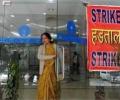
The staff of public sector banks had gone on a nationwide strike for two days beginning February 10 after discussions with the IBA failed.

TCS was the top gainer in the Sensex pack, rising over 3 per cent, followed by HUL, UltraTech Cement, Nestle India, Kotak Bank, Dr Reddy's and Titan. NSE Nifty surged 157.90 points to 17,234.15.
Asset quality stress has ballooned recently, as growth slowed and interest rates continued to rise.
'The effect will be seen two-three quarters down the line.'

The mergers will not involve any cash but only share swaps

Digital India and Make in India (initiatives) are designed to give special boost to manufacturing and India has huge potential in these areas.

'The household sector, which is still the largest contributor of financial savings, has been experiencing a decline in the last six years, and it has fallen below 8% of GDP.'

ONGC was the top gainer in the Sensex pack, rallying around 6 per cent, followed by NTPC, Tata Steel, ICICI Bank, ITC, Titan and Bajaj Auto. On the other hand, Axis Bank, M&M, Tech Mahindra, Asian Paints and Bajaj Finserv were among the laggards.
Among the gainers, RIL was followed by Sun Pharma, PowerGrid, Bajaj Finance, Nestle India and HCL Tech. On the other hand, Titan, L&T, ONGC, HDFC Bank and ITC were among the laggards.
